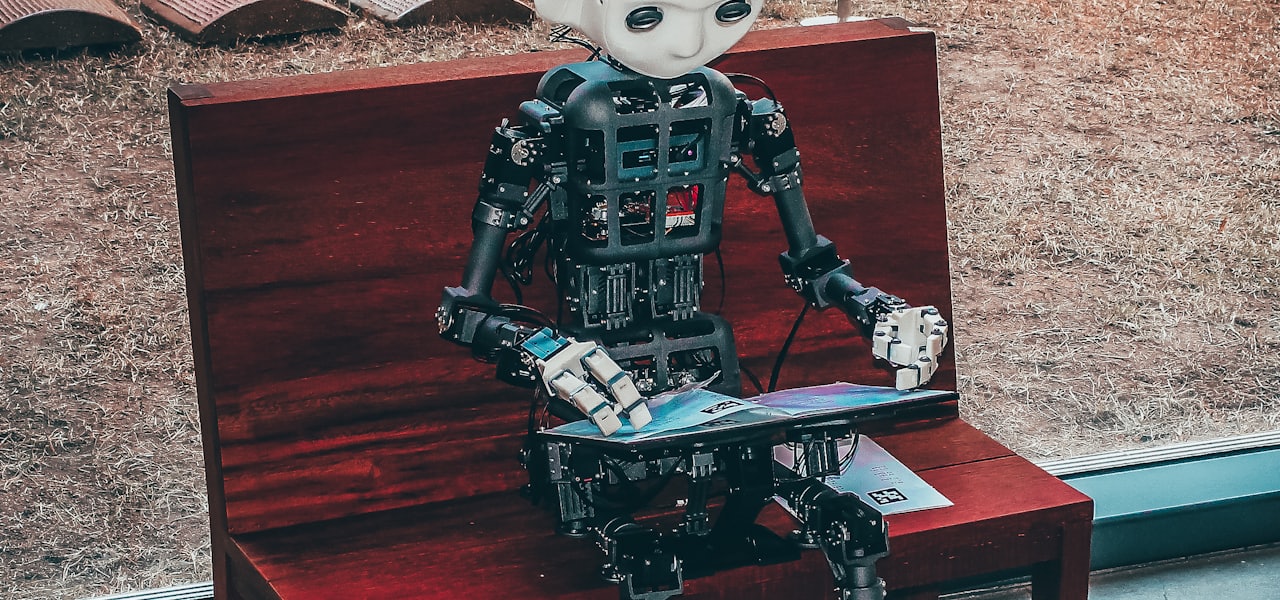
In telecommunications, control communications is the branch of technology devoted to the design, development, and application of communications facilities used specifically for control purposes, such as for controlling (a) industrial processes, (b) movement of resources, (c) electric power generation, distribution, and utilization, (d) communications networks, and (e) transportation systems.
Artificial intimacy
Artificial intimacy is a form of human-AI interaction in which an individual will form social connections, emotional bonds, or intimate relationships with various forms of artificial intelligence, including chatbots, virtual assistants, and other artificial entities. Artificially intimate relationships include not only romances, but parasocial relationships with virtual AI characters and the use of griefbots trained on a dead or otherwise lost individual. Artificial intimacy can arise because humans are prone to anthropomorphism. Responses from these AI models are often designed to simulate human interaction. Individuals experiencing artificial intimacy may exhibit attachment, love and commitment to certain AI models, akin to the bonds typically shared between humans. == Causes == === Perceived responsiveness === Robin Dunbar famously proposed that due to emergence of larger groups of humans, vocal communication and language in humans evolved to replace grooming as a means of bonding, arguing that language was a more efficient way to maintain and strengthen social bonds across wider social settings and networks. Further research in this field leads many psychologists to agree that social cognition, affiliative bonding and language in humans are deeply connected. The interpersonal model of intimacy considers communication to be key in affiliative bonding, suggesting that intimacy develops and deepens through open communication between partners in relationship. Specifically, when individuals communicate emotions and perceive their partner as responsive and caring, feelings of closeness and connection are enhanced, building intimacy. Social penetration theory also aligns with the idea of communication being central to intimacy, by explaining how interpersonal relationships develop through gradual increases in self-disclosure. When the benefits of emotional bonding outweigh the costs of vulnerability, individuals will partake in self-disclosure, opening up to one another. Thereby, the literature can be used to provide a proximate explanation for the emergence of artificial intimacy to understand how the phenomenon occurs. Artificial entities are able to mimic interpersonal communication between humans, which in turn can simulate sensations of intimacy within human users though a perceived sense of responsiveness. The relationship between human and AI does not come with the cost of vulnerability or social rejection, which may make self-disclosure easier than with other humans. Altogether, these factors may lead to the experience of anthropomorphism and formation of affiliative relationships. Skjuve et al's interview study on Replika chatbot users further aligns with this explanation, finding that users' perception of chatbots as "accepting, understanding and non-judgmental" facilitated relationship development between the AI and users, and the act of self-disclosure possibly strengthened relationships. Another study on Replika users' reviews and survey results found users perceived chatbots as emotional supportive companions. This evidence further suggests that the perception of artificial entities as capable of empathy and responsiveness in communication facilitate the development of intimate relationships between users and AI. === Loneliness and coping with negative emotions === Research has suggested that humans evolved social bonds as a result of evolutionary pressures that favored cooperation, information exchange and transmission, and group living. Many studies stress the presence of social bonds to be important for human living: research by Baumeister and Leary suggests that humans have a basic psychological need to form and maintain "strong, stable interpersonal relationships", and that a lack of social bonds or sense of belonging leads to negative psychological and physical outcomes. Eisenberger et al's study on the neuroimaging of brain activity suggests that human brains process social rejection and exclusion similarly to physical pain. Furthermore, Song et al's study found that lonely individuals tend to seek more connections in mediated environments, such as online platforms like Facebook. This was suggested to be as a means to reduce their offline loneliness from a lack of in-person interaction, while also fulfilling a need to communicate. Leading on from this, an ultimate explanation for why humans seek the perceived sense of connection from artificial intimacy is to fulfil an evolutionary need for bonding and belonging. Xie et al's study found loneliness to be a driving factor in chatbot interaction. Herbener and Damholdt's study on Danish high school students found that students who sought emotional support or engaged in reciprocal conversations with chatbots were significantly more lonely than their peers, perceived themselves as having less social support, and used the chatbots to cope with negative emotions. The aforementioned notion that chatbots were perceived to have a positive effect on users' negative emotions is also further supported by other studies. Skjuve et al's study found that chatbot relationships may have a positive effect on users' wellbeing. De Freitas et al ran several studies on the effect of chatbots on loneliness, consistently finding evidence suggesting that interaction with chatbots reduces loneliness in users: It was found that existing chatbot users used AI to alleviate loneliness, having an AI companion consistently reduced loneliness over the course of a week, and reductions in loneliness could be explained by chatbot performance—and specifically whether it was able to make users feel heard. Overall the evidence suggests an innate need for bonding evokes feelings of loneliness in users, who turn to artificial intimacy as a low-cost method alleviate these emotions. While many users report positive experiences, some researchers caution that pursuing artificial intimacy may lead to reduced social motivation, social substitution effects, withdrawal from real-life relationships and difficulty discerning reality from fantasy, which may increase longer-term loneliness and isolation. The long-term psychological and societal impacts remain under active investigation.
Sinkov statistic
Sinkov statistics, also known as log-weight statistics, is a specialized field of statistics that was developed by Abraham Sinkov, while working for the small Signal Intelligence Service organization, the primary mission of which was to compile codes and ciphers for use by the U.S. Army. The mathematics involved include modular arithmetic, a bit of number theory, some linear algebra of two dimensions with matrices, some combinatorics, and a little statistics. Sinkov did not explain the theoretical underpinnings of his statistics, or characterized its distribution, nor did he give a decision procedure for accepting or rejecting candidate plaintexts on the basis of their S1 scores. The situation becomes more difficult when comparing strings of different lengths because Sinkov does not explain how the distribution of his statistics changes with length, especially when applied to higher-order grams. As for how to accept or reject a candidate plaintext, Sinkov simply said to try all possibilities and to pick the one with the highest S1 value. Although the procedure works for some applications, it is inadequate for applications that require on-line decisions. Furthermore, it is desirable to have a meaningful interpretation of the S1 values.
Deepset
deepset is an enterprise software vendor that provides developers with the tools to build production-ready Artificial Intelligence (AI) and natural language processing (NLP) systems, using architectures such as agents, retrieval augmented generation (RAG) and multimodal AI. It was founded in 2018 in Berlin by Milos Rusic, Malte Pietsch, and Timo Möller. deepset authored and maintains the open source software Haystack and its commercial SaaS and self-hosted (VPC, on-prem, air gapped) offering, Haystack Enterprise Platform. (formerly known as deepset Cloud and deepset AI Platform) == History == In June 2018, Milos Rusic, Malte Pietsch, and Timo Möller co-founded deepset in Berlin, Germany. In the same year, the company served first customers who wanted to implement NLP services by tailoring BERT language models to their domain. In July 2019, the company released the initial version of the open source software FARM. In November 2019, the company released the initial version of the open source software Haystack. Throughout 2020 and 2021 deepset published several applied research papers at EMNLP, COLING and ACL, the leading conferences in the area of NLP. In 2020, the research contributions comprised German language models named GBERT and GELECTRA, and a question answering dataset addressing the COVID-19 pandemic called COVID-QA, which was created in collaboration with Intel and has been annotated by biomedical experts. In 2021, the research contributions comprised German models and datasets for question answering and passage retrieval named GermanQuAD and GermanDPR, a semantic answer similarity metric, and an approach for multimodal retrieval of texts and tables to enable question answering on tabular data. Haystack contains implementations of all three contributions, enabling the use of the research through the open source framework. In November 2021, the development of the FARM framework was discontinued and its main features were integrated into the Haystack framework. In April 2022, the company announced its commercial SaaS offering deepset Cloud, which was rebranded in 2025 as Haystack Enterprise Platform supporting SaaS and on-premise deployment options. As of August 2023, the most popular finetuned language model created by deepset was downloaded more than 52 million times. In 2024, deepset was named a Gartner Cool Vendor in AI Engineering. In 2025, deepset was recognized for its growth by WirtschaftsWoche and Sifted and shared partnership integrations and announcements with Meta Llama Stack, MongoDB, NVIDIA, Amazon Web Services (AWS), and PwC. As of September 2025, the Haystack open source AI orchestration framework has more than 24,000 GitHub stars. == Products and applications == Haystack is an open source Python AI Orchestration framework for building custom AI agents and applications with large language models. With its modular building block components, software developers and AI engineers can implement pipelines to build and customize various AI architectures over large document and multimodal data collections, such as agents, retrieval augmented generation (RAG), intelligent document processing (IDP), text-to-SQL as well as document retrieval, semantic search, text generation, question answering, or summarization. Haystack emphasizes context engineering, an approach to AI system design that focuses on explicit control over how contextual information is retrieved, structured, routed to language models, and evaluated after generation. This allows developers to build AI systems with transparent data flow, tool usage, and configurable reasoning processes. Haystack integrates with 90+ model and technology providers including Hugging Face Transformers, Elasticsearch, OpenSearch, OpenAI, Cohere, Anthropic, Mistral and others. Developers can extend these integrations with their own custom components. The framework has an active community on Discord with more than 4k members and GitHub, where so far more than 300 people have contributed to its continuous development, and engage on Meetup. Thousands of organizations use the framework, including public sector leaders like the European Commission and Global 500 enterprises like Airbus, Intel, NVIDIA, Lufthansa, Netflix, Apple, Infineon, Alcatel-Lucent Enterprise, BetterUp, Etalab, Sooth.ai, and Lego. On top of the Haystack open source framework, deepset offers two enterprise offerings to organizations. Haystack Enterprise Starter provides enterprise support on the open source framework from the Haystack engineering team as well as a private GitHub repository with production use case templates and Kubernetes deployment guides. The Haystack Enterprise Platform supports customers at building scalable AI applications by covering the entire process of prototyping, experimentation, deployment, monitoring, and governance. It is built on the Haystack open source framework and is available for hosting in the cloud and self-hosted via VPC, on-premise, or air gapped environments. deepset's enterprise tools are used by organizations including The European Commission, The Economist, Oxford University Press, the German Federal Ministry of Research, Technology, and Space (BMFTR), Manz Verlag, and the German Armed Forces. FARM was an earlier framework for adapting representation models. One of its core concepts was the implementation of adaptive models, which comprised language models and an arbitrary number of prediction heads. FARM supported domain-adaptation and finetuning of these models with advanced options, for example gradient accumulation, cross-validation or automatic mixed-precision training. Its main features were integrated into Haystack in November 2021, and its development was discontinued at that time. == Funding == On August 9, 2023, deepset announced a Series B investment round of $30 million led by Balderton Capital and including participation from existing investors GV, System.One, Lunar Ventures and Harpoon Ventures. On April 28, 2022, deepset announced a Series A investment round of $14 million led by GV, with the participation of Harpoon Ventures, Acequia Capital and a team of experienced commercial open source software and machine learning founders, such as Alex Ratner (Snorkel AI), Mustafa Suleyman (Deepmind), Spencer Kimball (Cockroach Labs), Jeff Hammerbacher (Cloudera) and Emil Eifrem (Neo4j). A previous pre-seed investment round of $1.6 million on March 8, 2021, was led by System.One and Lunar Ventures, who also participated in the subsequent Series A round.
Tomáš Mikolov
Tomáš Mikolov is a Czech computer scientist working in the field of machine learning. In March 2020, Mikolov became a senior research scientist at the Czech Institute of Informatics, Robotics and Cybernetics. == Career == Mikolov obtained his PhD in Computer Science from Brno University of Technology for his work on recurrent neural network-based language models. He is the lead author of the 2013 paper that introduced the Word2vec technique in natural language processing and is an author on the FastText architecture. Mikolov came up with the idea to generate text from neural language models in 2007 and his RNNLM toolkit was the first to demonstrate the capability to train language models on large corpora, resulting in large improvements over the state of the art. Prior to joining Facebook in 2014, Mikolov worked as a visiting researcher at Johns Hopkins University, Université de Montréal, Microsoft and Google. He left Facebook at some time in 2019/2020 to join the Czech Institute of Informatics, Robotics and Cybernetics. Mikolov has argued that humanity might be at a greater existential risk if an artificial general intelligence is not developed.
Automated attendant
In telephony, an automated attendant (also auto attendant, auto-attendant, autoattendant, automatic phone menus, AA, or virtual receptionist) allows callers to be automatically transferred to an extension without the intervention of an operator/receptionist. Many AAs will also offer a simple menu system ("for sales, press 1, for service, press 2," etc.). An auto attendant may also allow a caller to reach a live operator by dialing a number, usually "0". Typically the auto attendant is included in a business's phone system such as a PBX, but some services allow businesses to use an AA without such a system. Modern AA services (which now overlap with more complicated interactive voice response or IVR systems) can route calls to mobile phones, VoIP virtual phones, other AAs/IVRs, or other locations using traditional land-line phones or voice message machines. == Feature description == Telephone callers will recognize an automated attendant system as one that greets calls incoming to an organization with a recorded greeting of the form, "Thank you for calling .... If you know your party's extension, you may dial it any time during this message." Callers who have a touch-tone (DTMF) phone can dial an extension number or, in most cases, wait for operator ("attendant") assistance. Since the telephone network does not transmit the DC signals from rotary dial telephones (except for audible clicks), callers who have rotary dial phones have to wait for assistance. On a purely technical level it could be argued that an automated attendant is a very simple kind of IVR however, in the telecom industry the terms IVR and auto attendant are generally considered distinct. An automated attendant serves a very specific purpose (replace live operator and route calls), whereas an IVR can perform all sorts of functions (telephone banking, account inquiries, etc.). An AA will often include a directory which will allow a caller to dial by name in order to find a user on a system. There is no standard format to these directories, and they can use combinations of first name, last name, or both. The following lists common routing steps that are components of an automated attendant: Transfer to extension Transfer to voicemail Play message (i.e., "our address is ...") Go to a sub-menu Repeat choices In addition, an automated attendant would be expected to have values for the following: '0' – where to go when the caller dials '0' Timeout – what to do if the caller does nothing (usually go to the same place as '0') Default mailbox – where to send calls if '0' is not answered (or is not pointing to a live person) == Background == PBXs (private branch exchanges) or PABXs (private automatic branch exchanges) are telephone systems that serve an organization that has many telephone extensions but fewer telephone lines (sometimes called "trunks") that connect that organization to the rest of the global telecommunications network. While persons within an enterprise served by a PBX can call each other by dialing their extension numbers, incoming calls, i.e., calls originating from a telephone not served by the PBX but intended for a party served by the PBX, required assistance from a switchboard operator (also called a "switchboard attendant") or a telephone service called DID ("direct inward dialing"). Direct inward dialing has advantages such as rapid connection to the destination party and disadvantages including cost, lack of identification of the called organization and use of ten-digit telephone numbers. Automated attendants provide, among many other things, a way for an external caller to be directed to an extension or department served by a PBX system without using direct inward dialing or without switchboard attendant assistance. == History == Automated attendants are not part of voicemail systems. Voice messaging (or voicemail or VM) technology has existed since the late 1970s; in the early 1980s companies provided voice-prompting systems that allowed callers to reach (route the call) to an intended party, not necessarily to leave a message. Automated attendant systems are also referred to as automated menu systems and much early work in this field was done by Michael J. Freeman, Ph.D. == Time-based routing == Many auto attendants will have options to allow for time-of-day routing, as well as weekend and holiday routing. The specifics of these features will depend entirely on the particular automated attendant, but typically there would be a normal greeting and routing steps that would take place during normal business hours, and a different greeting and routing for non-business hours.
Bob Coecke
Bob Coecke (born 23 July 1968) is a Belgian theoretical physicist and logician. He was Professor of Quantum foundations, Logics, and Structures at Oxford University until 2020. He was Chief Scientist at quantum computing company Quantinuum, until 2025 and founded a startup called Relational Intelligence in 2026. He is also Distinguished Visiting Research Chair at the Perimeter Institute for Theoretical Physics, and Emeritus Fellow at Wolfson College, Oxford. He pioneered categorical quantum mechanics (entry 18M40 in Mathematics Subject Classification 2020), Quantum Picturalism, ZX-calculus, DisCoCat model for natural language,, quantum natural language processing (QNLP) and quantum education through the book Quantum in Pictures. He is a founder of the Quantum Physics and Logic community and the Applied Category Theory communities and conference series, and of the journal Compositionality. Coecke is also a composer and musician, who has been called a pioneer of industrial music, and is also one of the pioneers of employing quantum computers in music. == Education and career == Coecke obtained his doctorate in sciences at the Vrije Universiteit Brussel in 1996, and performed postdoctoral work in the Theoretical Physics Group of Imperial College, London in the Category Theory Group of the Mathematics and Statistics Department at McGill University in Montreal, in the Department of Pure Mathematics and Mathematical Statistics of Cambridge University, and in the Department of Computer Science, University of Oxford. He was an EPSRC Advanced Research Fellow at the Department of Computer Science, University of Oxford, where he became Lecturer in Quantum Computer Science in 2007, and jointly with Samson Abramsky built and headed the Quantum Group. In July 2011, he was nominated professor of Quantum Foundations, Logics and Structures at Oxford University, with retroactive effect as of October 2010. He was a Governing Body Fellow of Wolfson College, Oxford since 2007, where he now is an Emeritus Fellow. In January 2019, Coecke became Senior Scientific Advisor of Cambridge Quantum Computing, and in January 2021 he resigned from his Professorship at Oxford, to become Chief Scientist of Cambridge Quantum Computing. After the merger of Cambridge Quantum Computing with Honeywell Quantum Systems, he stayed on as Chief Scientist of the joint entity Quantinuum until 2025. In January 2023 he also became Distinguished Visiting Research Chair at the Perimeter Institute for Theoretical Physics. == Work == Coecke's research focuses on the foundations of physics, more particularly category theory, logic, and diagrammatic reasoning, with application to quantum informatics, quantum gravity, and NLP. He has pioneered categorical quantum mechanics together with Samson Abramsky, and spearheaded the development of a diagrammatic quantum formalism based on Penrose graphical notation, on which he wrote a textbook entitled Picturing Quantum Processes with Aleks Kissinger. With Ross Duncan he pioneered ZX-calculus. He pioneered the DisCoCat model for natural language, with Stephen Clark and Mehrnoosh Sadrzadeh. He also pioneered quantum natural language processing (QNLP), with Will Zeng, and colleagues at Cambridge Quantum Computing. == Music == Coecke is also a musician, performing and recording since the eighties. He retrospectively has been named a pioneer of industrial music. His band, Black Tish, "used cutting edge sampling techniques for the time, a host of synth and sound loops and metal-style guitars to create a heavy rock/electronica fusion unlike anything heard before", and "bridge the gap between the pure experimental nature of bands like Throbbing Gristle and Einstürzende Neubauten and the (comparatively) more radio accessible Ministry or Nine Inch Nails". Coecke is also one of the pioneers of employing quantum computers in music. == Selected publications == Textbooks Bob Coecke, Aleks Kissinger:Picturing Quantum Processes. A First Course in Quantum Theory and Diagrammatic Reasoning, Cambridge University Press, 2017, ISBN 978-1316219317 Bob Coecke, Stefano Gogioso:Quantum in Pictures, Quantinuum, 2022, ISBN 978-1-7392147-1-5 Books (as editor) Bob Coecke, David Moore, Alexander Wilce (eds.): Current Research in Operational Quantum Logic: Algebras, Categories, Languages, Fundamental Theories of Physics, Kluwer Academic, 2010, ISBN 978-9048154371 Bob Coecke (ed.): New Structures for Physics, Lecture Notes in Physics 813, Springer, 2011, ISBN 978-3642128202 Articles Bob Coecke: Kindergarten quantum mechanics, arXiv:quant-ph/0510032 Samson Abramsky, Bob Coecke: A categorical semantics of quantum protocols, Proceedings of the 19th Annual IEEE Symposium on Logic in Computer Science, 2004, pp. 415–425 Bob Coecke, Ross Duncan: Interacting quantum observables, Automata, Languages and Programming, pp. 298–310, 2008 Konstantinos Meichanetzidis, Alexis Toumi, Giovanni de Felice, Bob Coecke: Grammar-Aware Question-Answering on Quantum Computers, arXiv:2012.03756 Bob Coecke: The Mathematics of Text Structure, arXiv:1904.03478 Will Zeng, Bob Coecke: Quantum Algorithms for Compositional Natural Language Processing, arXiv:1608.01406 Bob Coecke, Tobias Fritz, Robert Spekkens: A mathematical theory of resources, arXiv:1409.5531 Bob Coecke: An Alternative Gospel of structure: order, composition, processes, arxiv:1307.4038 Bob Coecke, Mehrnoosh Sadrzadeh, Steven Clark: Mathematical Foundations for a Compositional Distributional Model of Meaning, arXiv:1003.4394 Bob Coecke: Quantum Picturalism, arXiv:0908.1787 Software articles Eduardo Reck Miranda, Richie Yeung, Anna Pearson, Konstantinos Meichanetzidis, Bob Coecke: A quantum natural language processing approach to musical intelligence, arXiv:2111.06741 Dimitri Kartsaklis, Ian Fan, Richie Yeung, Anna Pearson, Robin Lorenz, Alexis Toumi, Giovanni de Felice, Konstantinos Meichanetzidis, Stephen Clark, Bob Coecke: lambeq: An efficient high-level python library for quantum NLP, arXiv:2110.04236 Giovanni de Felice, Alexis Toumi, Bob Coecke: Discopy: monoidal categories in Python, arXiv:2111.06741